Decisions based on instinct, not data
When I joined the AMG HMI team, UI decisions were made well — but not systematically. Experienced designers with deep automotive knowledge made informed judgments. The problem: no baseline. No shared definition of “better.” No process for finding out whether users actually agreed.
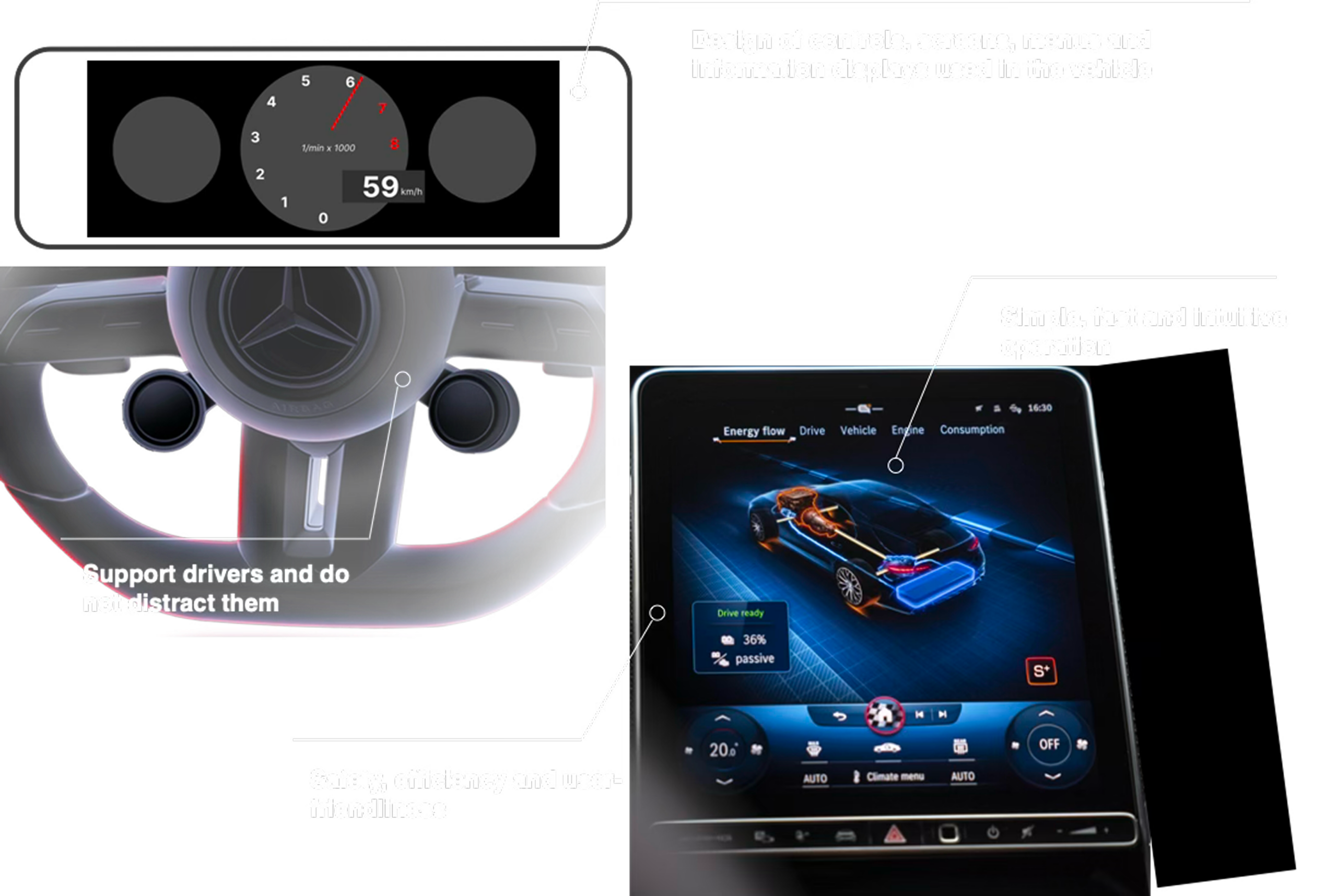
UX in automotive — key interaction surfaces and display contexts in modern vehicles
This isn’t unusual in automotive. Long development cycles, limited user access, and a culture of engineering precision sometimes leaves user research as an afterthought. AMG was at Level 2–3 on the Nielsen Norman UX Maturity scale — UX existed, but as individual practice, not as an integrated discipline.
Increase maturity by 1–2 levels
The goal wasn’t to transform AMG overnight. It was to establish a lightweight, repeatable testing practice that fit within AMG’s existing development cadence without requiring a full research function. Target: move from Level 2–3 to at least Level 4.
AMG started at level 2 — target was to reach level 4 within the project scope.
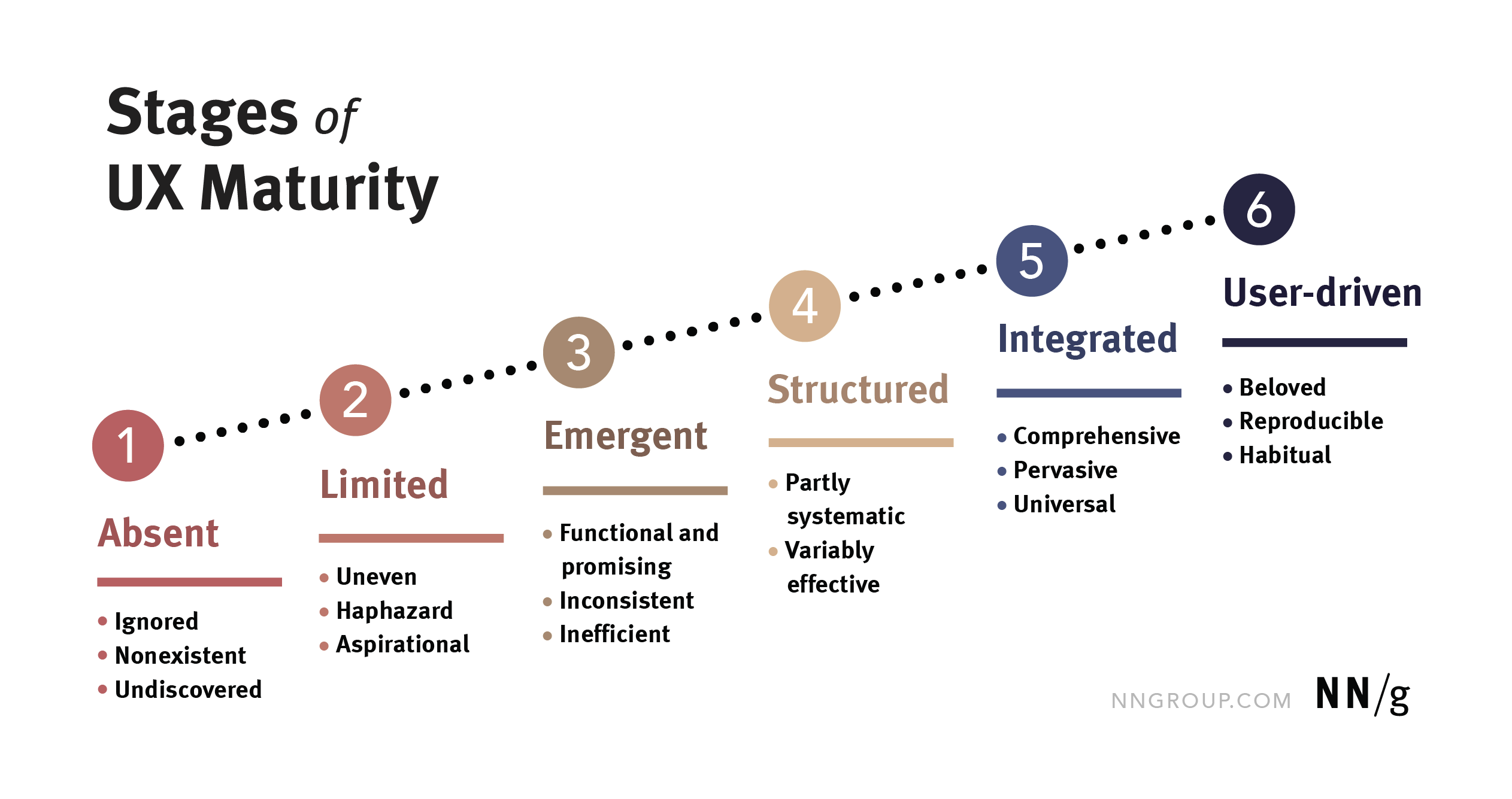
Nielsen Norman UX Maturity Model — the shared framework used to define current state and targets
Key constraint: any proposed process had to work with limited user access, long lead times for vehicle availability, and a team primarily trained in design — not research methodology.
Making the current state tangible
The first challenge wasn’t designing new processes — it was making the existing state visible and legible to stakeholders who didn’t share the same frame of reference.
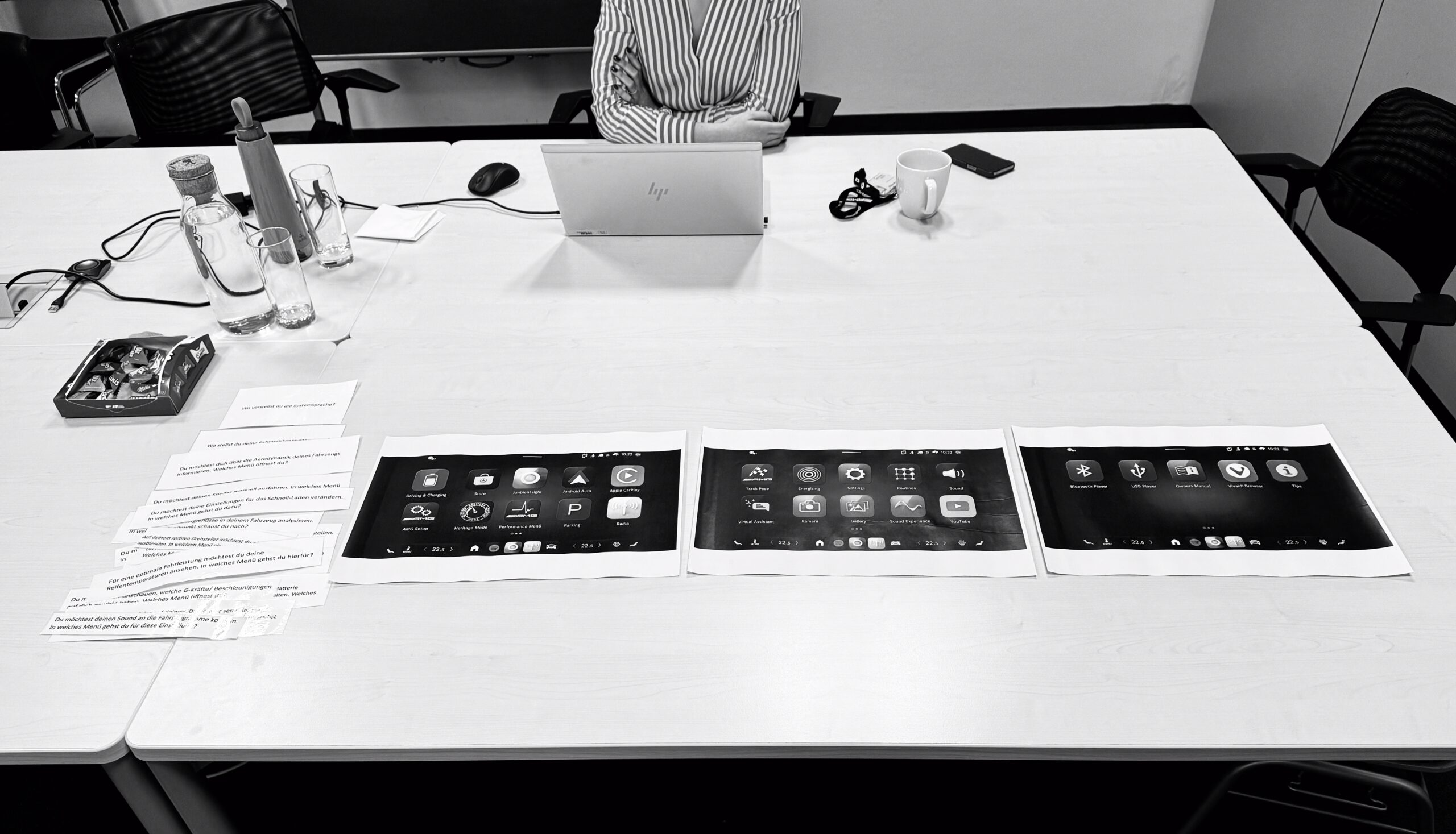
Workshop session — mapping current decision-making patterns and identifying research gaps
A structured audit of existing practice mapped how UI decisions were currently made, where user input entered the process if at all, and which project types were most exposed to risk from untested assumptions. Based on the audit, I developed a phased research roadmap: which methods to introduce first, what infrastructure was needed, and how findings should be documented to actually be used.
Three research streams
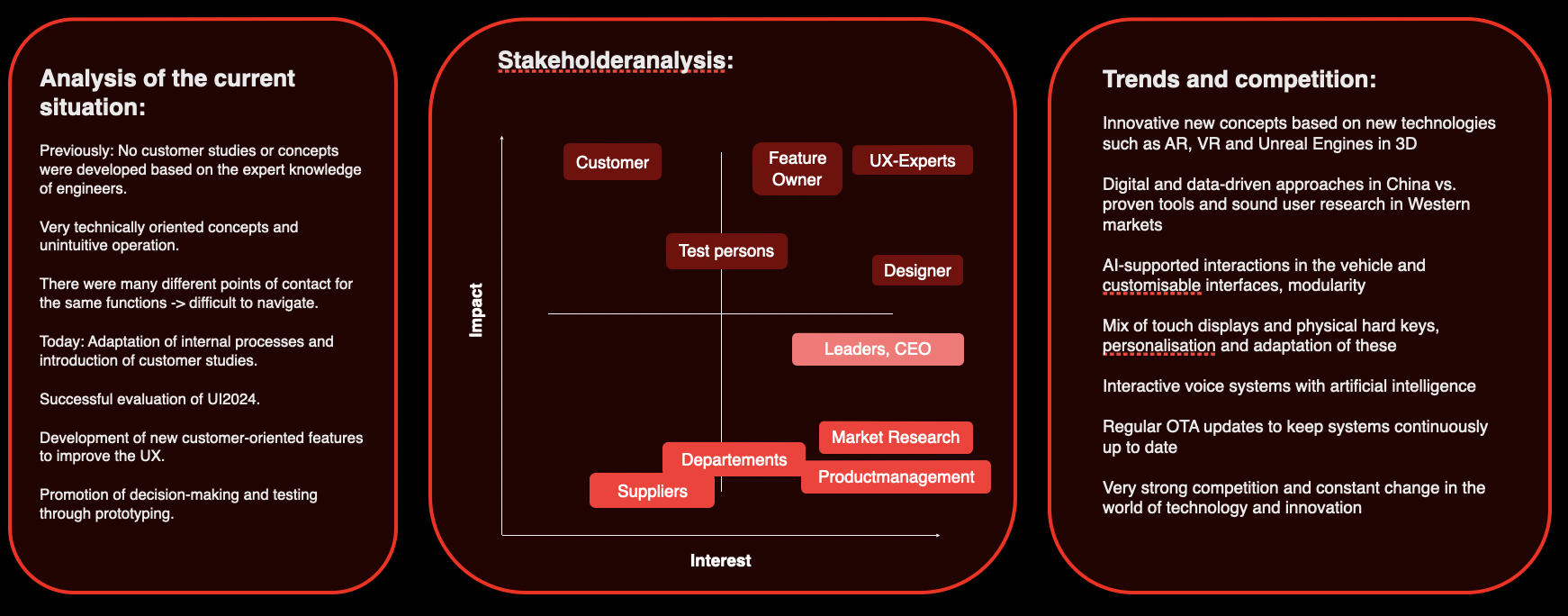
Research overview — three parallel streams informing the maturity proposal
Current Situation Analysis
- Structured review of existing HMI evaluation methods at AMG
- Interviews with designers and engineers on current decision process
- Identification of highest-risk decision points in the concept pipeline
- Benchmark of internal research infrastructure
Stakeholder Analysis
- Mapping of key stakeholders and their relationship to user data
- Understanding of what types of evidence each stakeholder group responds to
- Identification of internal champions and potential blockers
- Definition of success criteria per stakeholder group
Trends & Competition
- Review of UX maturity models — Nielsen Norman, InVision, others
- Analysis of research practice at comparable automotive OEMs
- Review of industry trend reports on in-car UX investment
- Identification of transferable practices from consumer product companies
A concrete proposal — and a changed conversation
The project produced a clear, actionable proposal for integrating lightweight usability testing into AMG’s concept development pipeline. More importantly: the conversation changed. Design reviews started including a third question alongside aesthetics and technical feasibility — “what do we actually know about how users experience this?”
How the maturity level increased over two years
The UX maturity work wasn’t a single project — it ran across the entire two years and was built through three concrete loops of implementation, each connected to the other case studies in this portfolio.
Loop 1 — Establishing usability testing
Introduced the first structured usability tests at Mercedes-AMG. Defined the process, built the test environment, and ran initial studies to validate UI concepts. This created the first real user data baseline the team had ever worked with.
Loop 2 — Embedding user-centered design
Expanded the process from single tests to a repeatable workflow. Ran A/B tests, qualitative interviews and iterative concept validation. Stakeholder alignment and decision-making started to shift from expert opinion toward evidence.
Loop 3 — In-car prototype testing
Brought prototyping into the vehicle using ProtoPie and CarConnect. The Master Thesis adaptive dashboard study was the culmination of this loop — a full in-vehicle user study with pre/post survey and think-aloud sessions, testing a concept that would not have been possible without the two years of groundwork.
You can't improve what you can't measure. The first step to better UX practice isn't better methods — it's making the current state visible.
On building practice in established organisations
This project was less about research and more about change management. Technical research skills got me into the room — but getting anything to actually change required understanding organisational dynamics, stakeholder motivations, and the gap between what people say they want and what they’ll actually adopt.
The maturity model gave me a shared language. Instead of arguing about whether AMG did “enough” UX research, we could talk about levels, trajectories, and specific gaps. That shift from qualitative judgment to structured framework made the conversation productive instead of defensive.