Fresh food goes bad. Freezing isn’t the answer.
The idea started with a familiar frustration: you buy fresh food with good intentions, life gets in the way, and a few days later it’s in the bin. Freezing is the obvious workaround — but it comes with real trade-offs. Vitamins are lost, flavour degrades, and food gets buried and forgotten at the back of the freezer.
The challenge we set ourselves in this BSH × Mutabor university project: design a product that keeps fresh food genuinely fresher for longer, fits into a real kitchen, and connects to the digital tools people already use.
Who needs this — and why
Research started with use cases rooted in real everyday situations: the motivated shopper whose vegetables go mouldy after a distracted week, the meal-prepper who wants to cook for a month instead of a week, the person who’s forgotten what’s hiding at the back of the fridge.
Three user types shaped the concept. The conscious shopper buys fresh and varied — but wastes food when plans change. The meal-prepper wants to prepare large batches but is limited by how long fresh ingredients keep. The spontaneous traveller needs food to last while they’re away for a few days without throwing it all out first.
Across all three: the problem isn’t motivation. It’s that standard refrigeration simply isn’t good enough for how people actually want to eat.
Three people, one problem
Research produced three distinct personas — each with a different relationship to food, freshness, and the fridge.
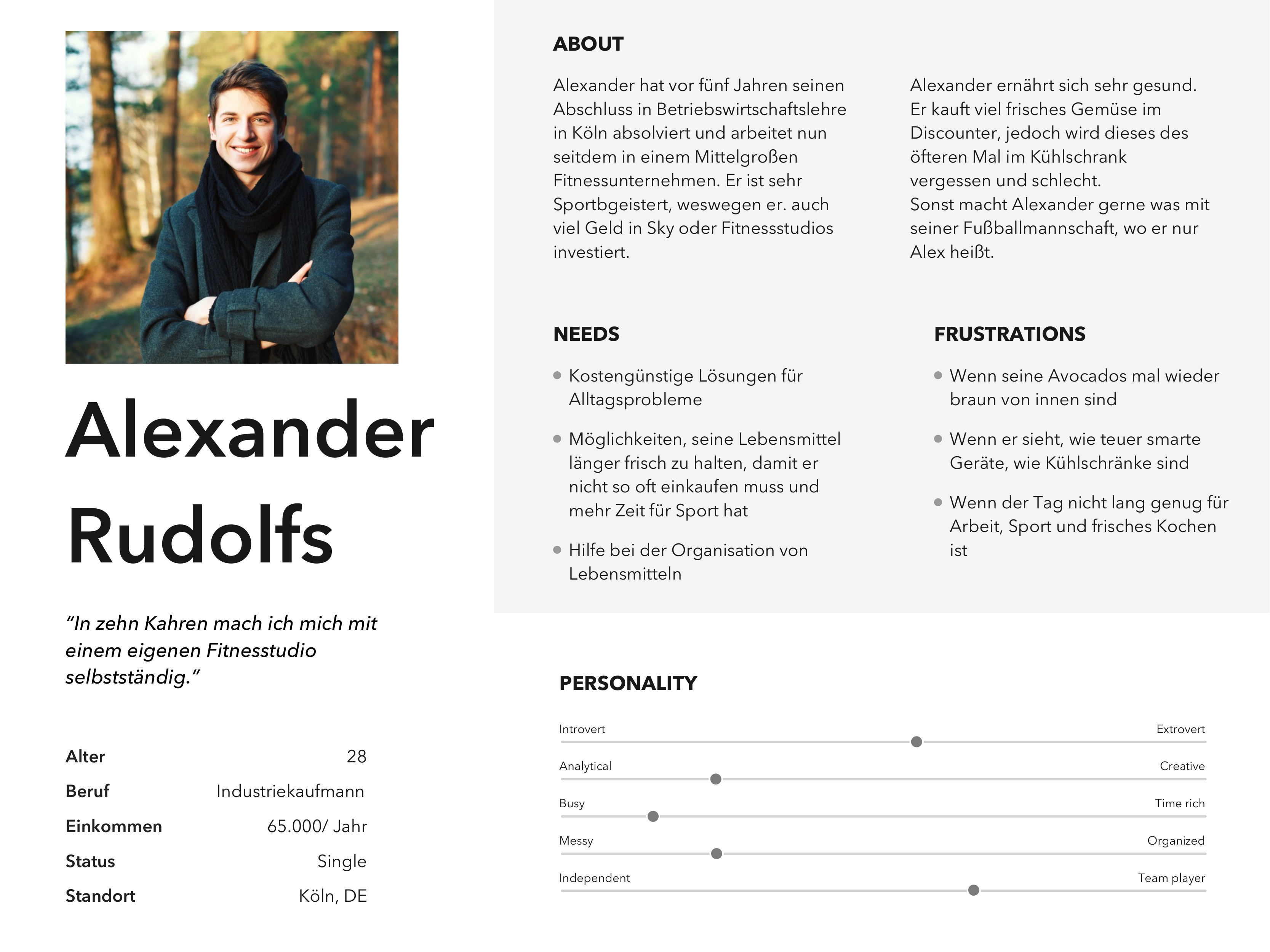
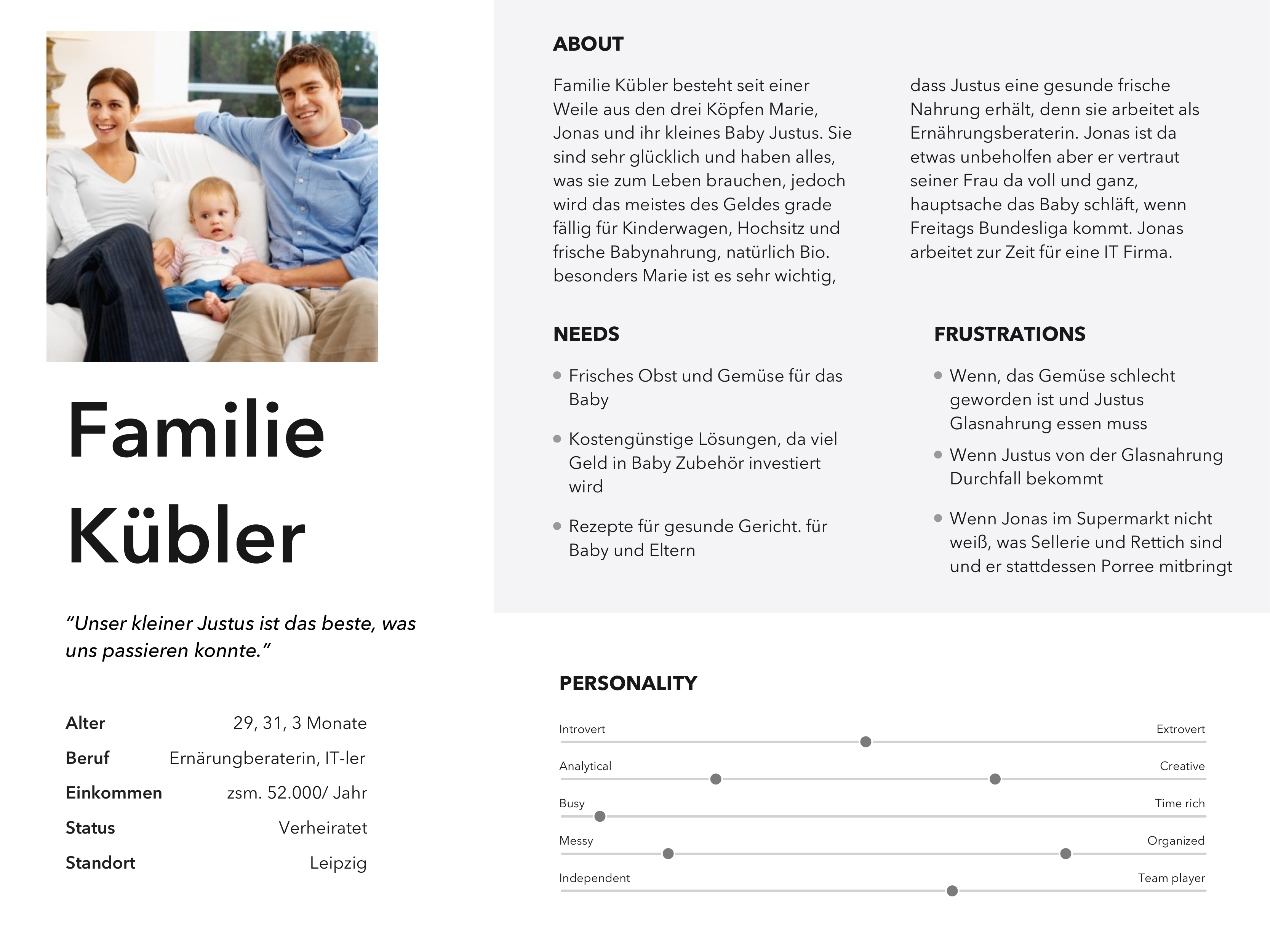
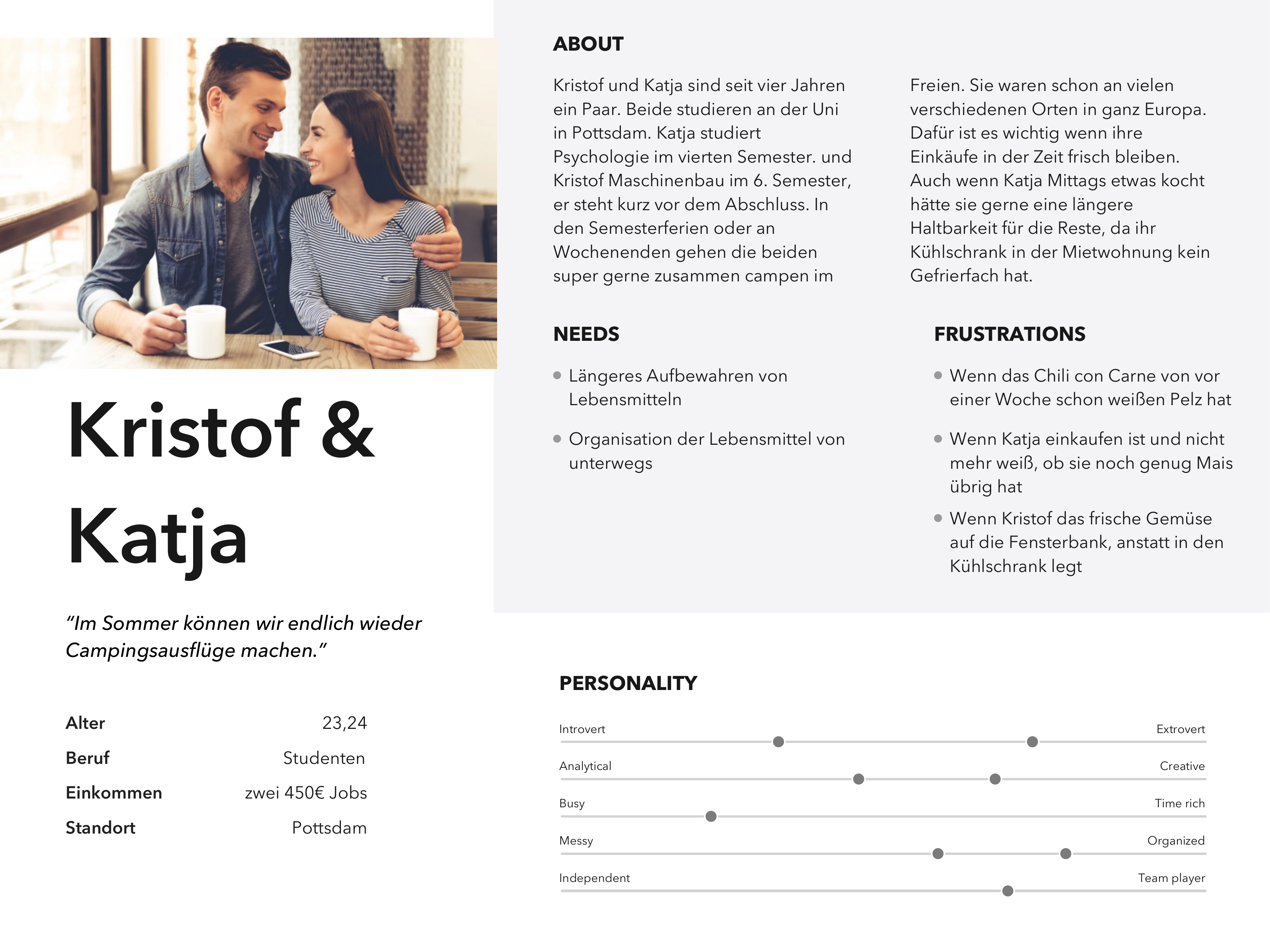
Alexander (28, health-conscious professional, Cologne) · Familie Kübler (young family with baby, Leipzig) · Kristof & Katja (students + campers, Potsdam)
Alexander buys fresh produce regularly but forgets it in the fridge — his frustration is that healthy eating takes more time and money than it should. Familie Kübler needs fresh organic food for their baby and can’t afford for it to spoil. Kristof & Katja are students who go camping and want food to last while they’re away — with no freezer compartment in their rental flat.
Across all three: different lives, same core problem. Standard refrigeration simply doesn’t keep fresh food fresh for long enough.
Vacuum sealing built into the fridge
Vakuumi is a modular vacuum-sealing system that replaces the vegetable drawer of a standard refrigerator. Each compartment seals airtight at the press of a button — keeping produce, meat, and dairy fresh for weeks rather than days.
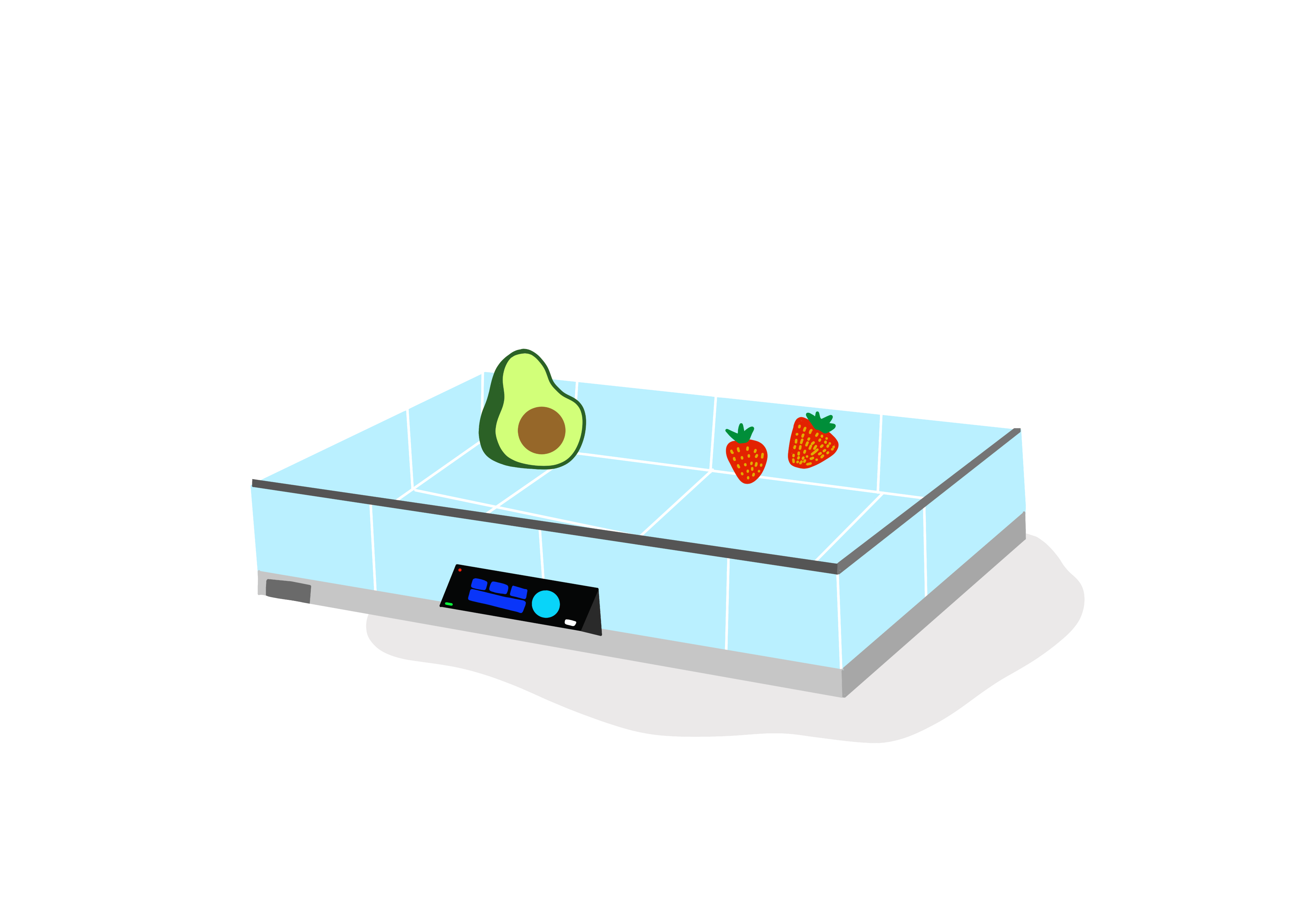
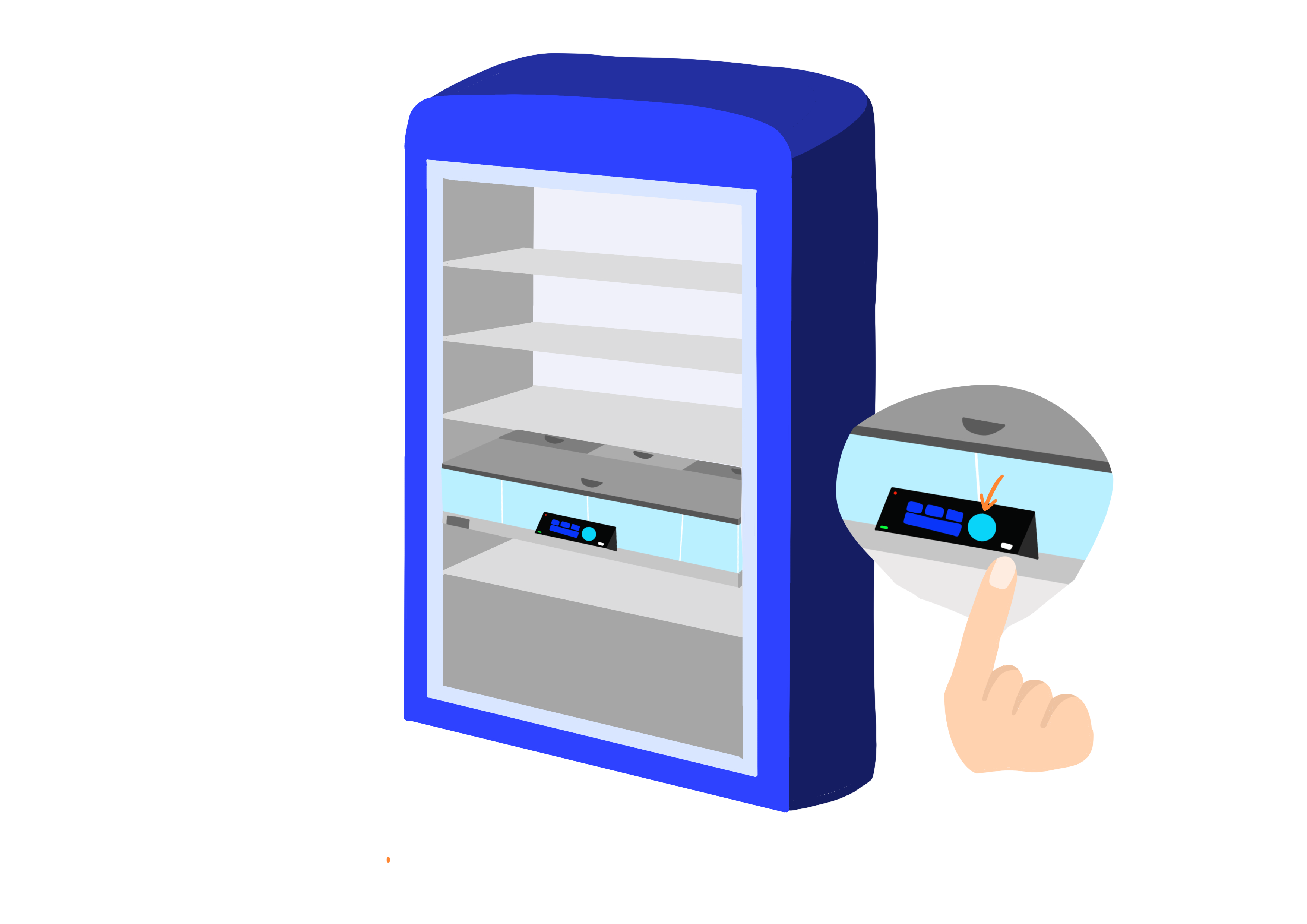
Left: filling the compartments with food. Right: pressing the button on the onboard display activates the vacuum seal — the device sits directly in the fridge door.
The compartment layout is configurable: three smaller sections on top for different food types, one full-width section below for larger items. Each seals independently. The tray fits standard refrigerator widths and slides in as a drawer replacement without modification — dishwasher-safe, reconfigurable, fully reusable.
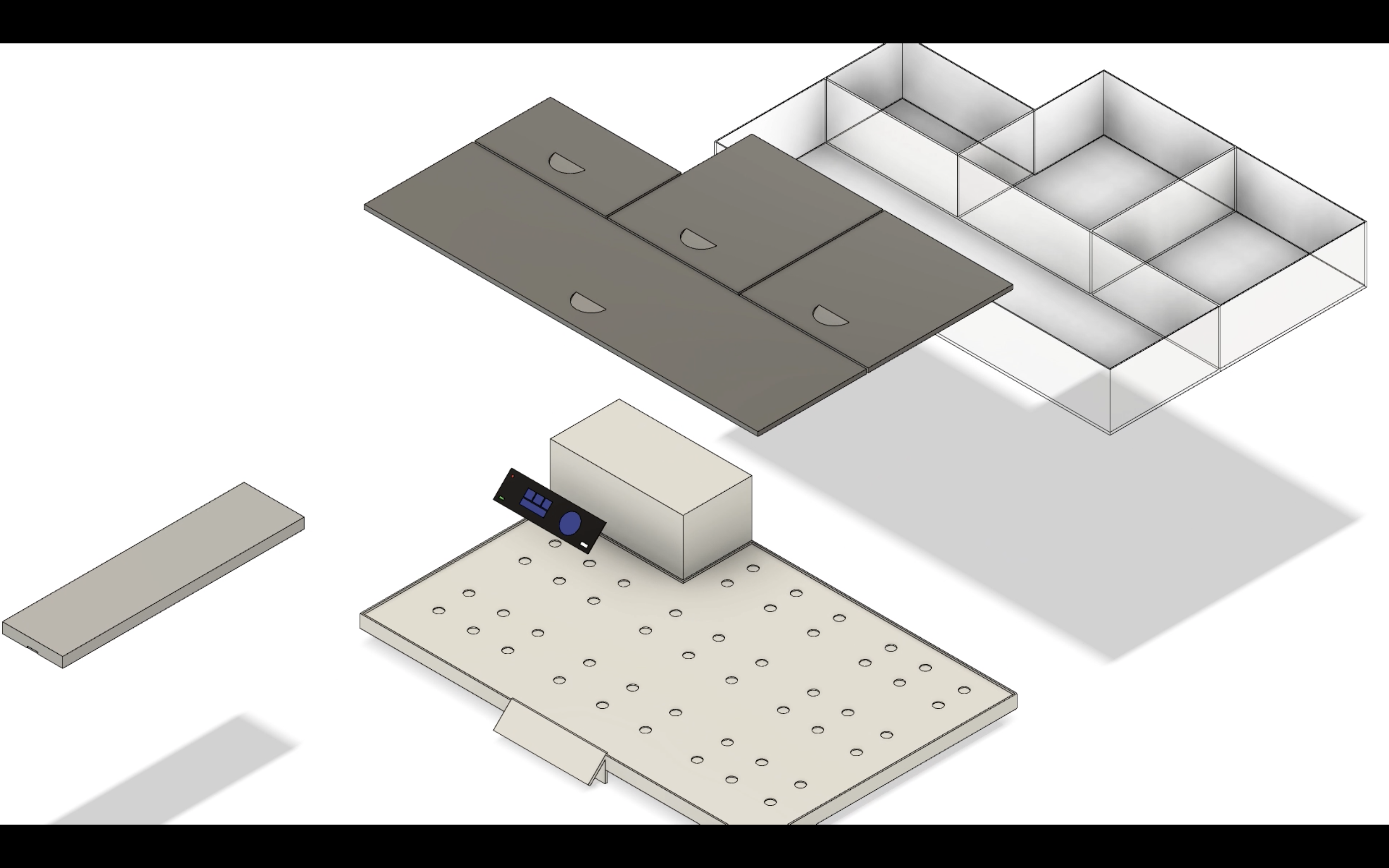
Exploded view of the Vakuumi system: vacuum base plate with integrated pump, modular lid panels, and configurable tray compartments.
Track what’s in the fridge — before it’s too late
A physical product alone doesn’t solve the forgetting problem. Vakuumi connects to the BSH Home Connect ecosystem, adding food tracking, expiry alerts, and a visual compartment map to the app users already have for their BSH appliances.
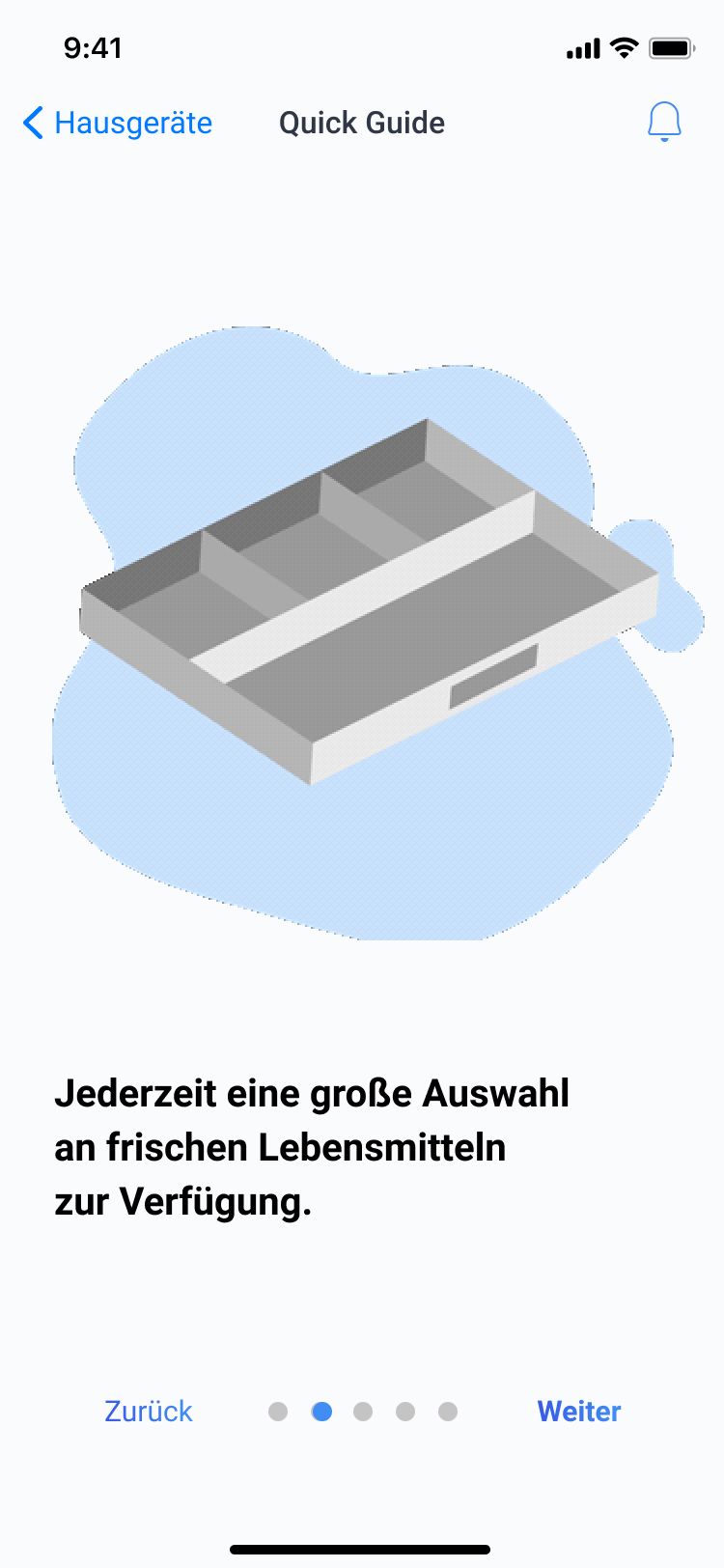
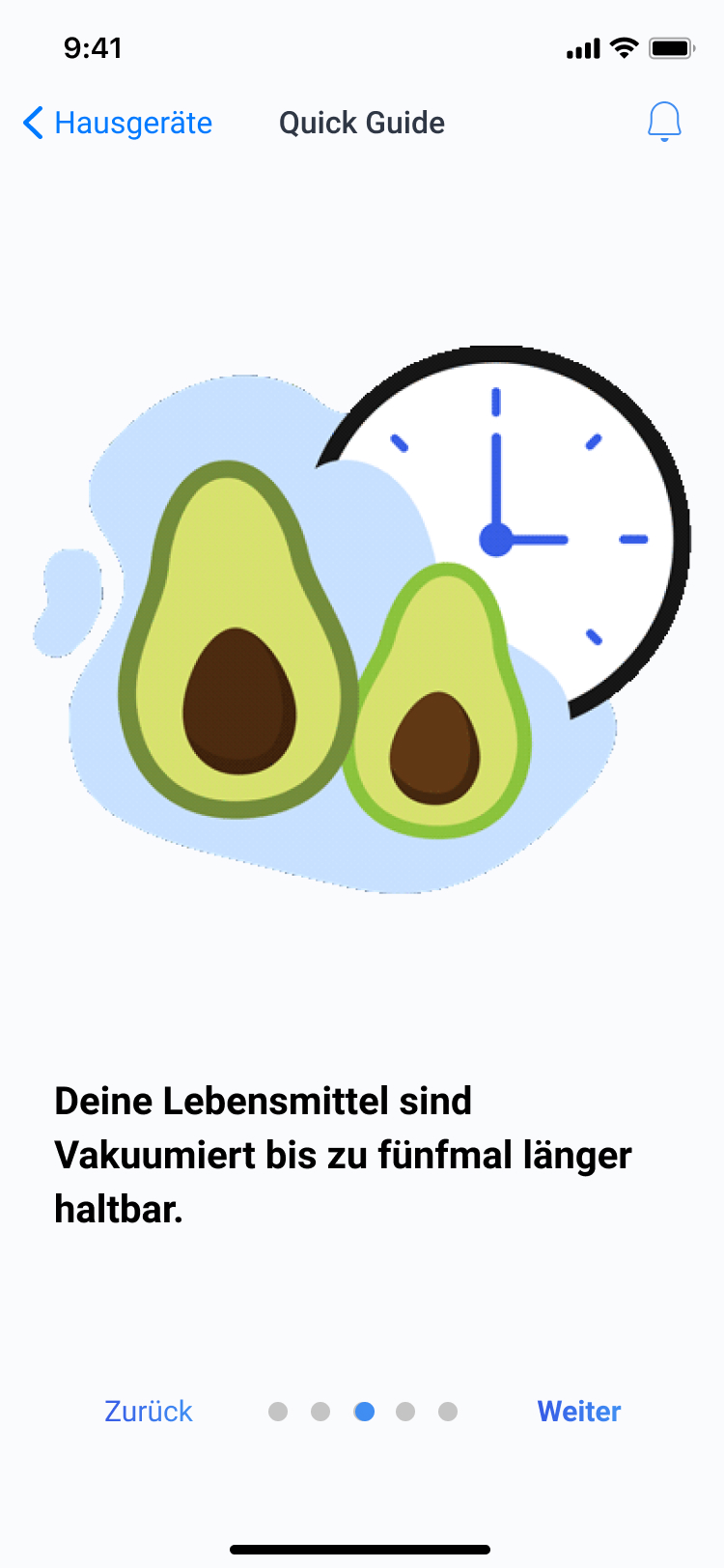
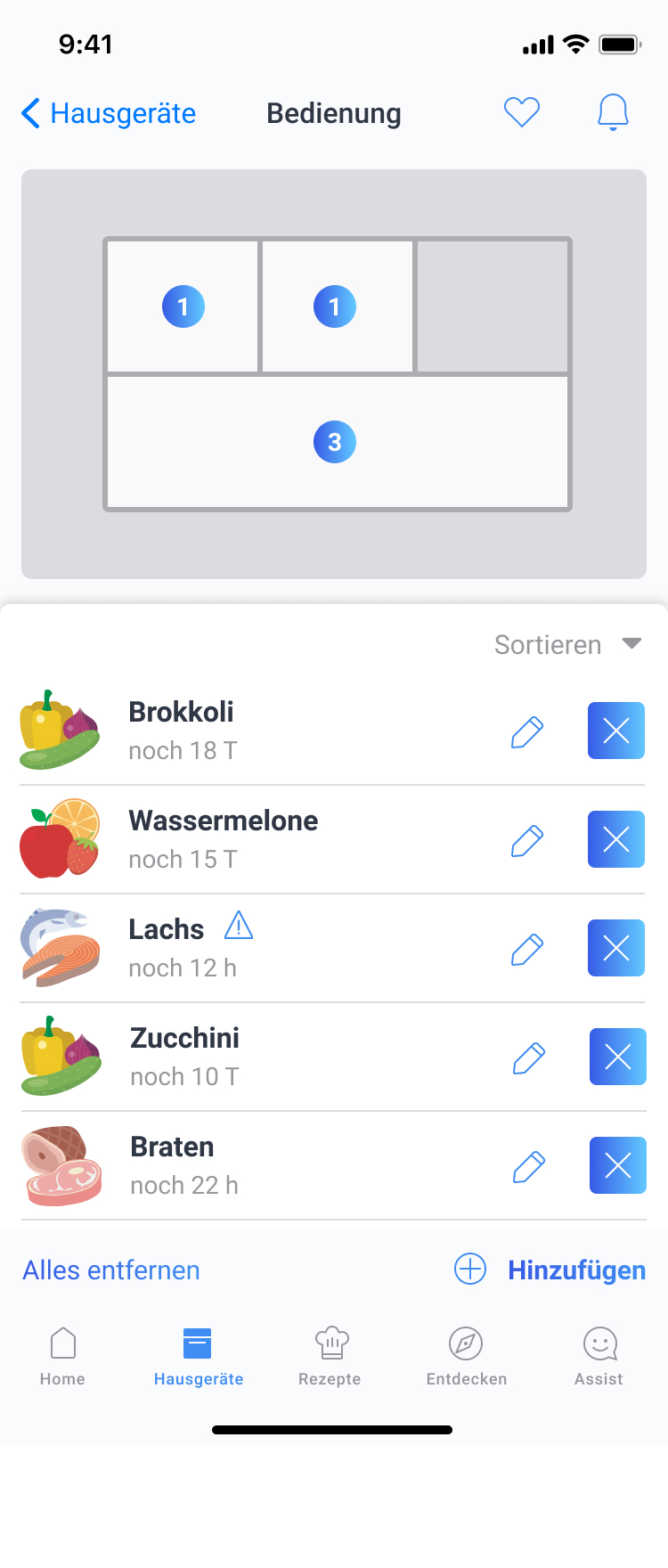
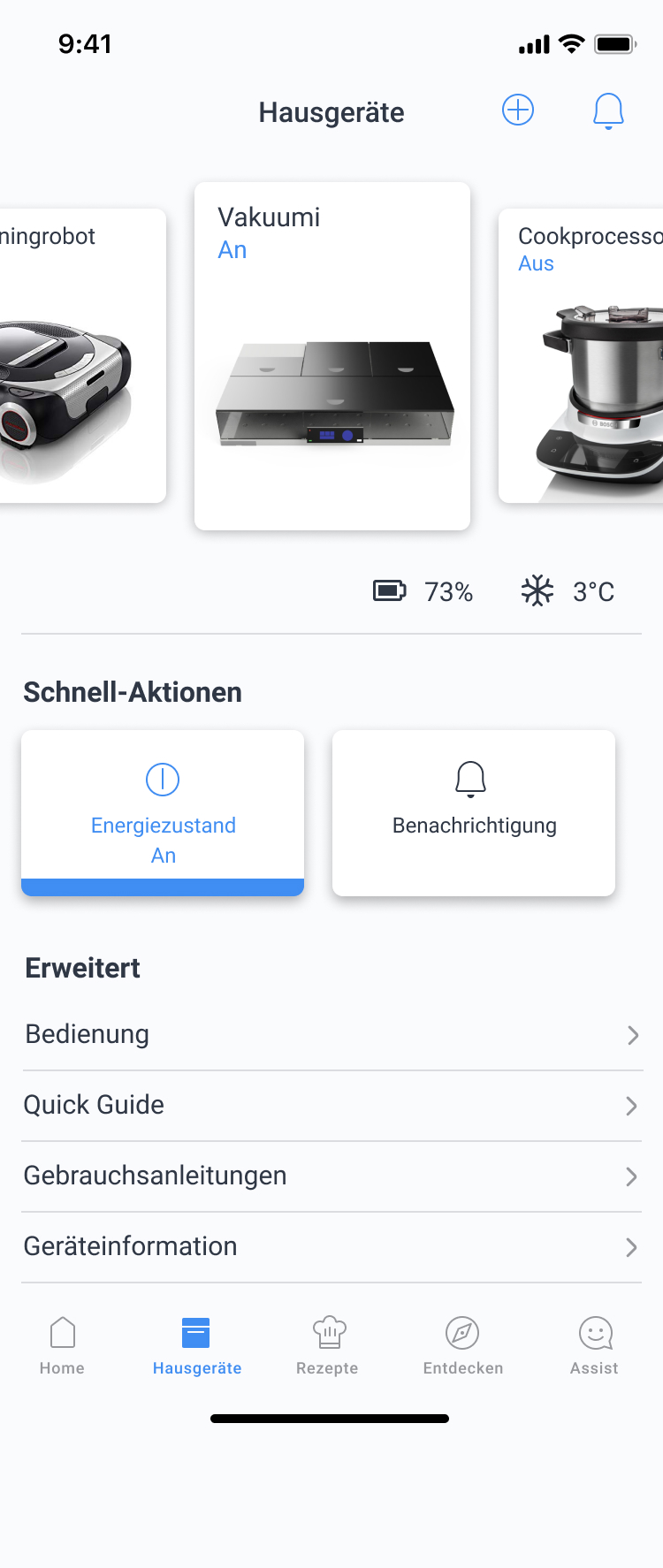
Onboarding flow: welcome screen, compartment overview, freshness claim — then the main inventory view with days-remaining per item, and the device overview in BSH Home Connect.
The onboarding Quick Guide introduces the product in five screens — what it does, how the compartments work, and how to connect it. After setup, the main view shows a compartment map with each item logged and the days or hours of freshness remaining. A warning appears when something should be used soon.
The design language follows BSH Home Connect: clean white interface, blue accent, card-based layout. Integration was deliberate — rather than building a standalone app, Vakuumi lives where users already manage their appliances.
A product with its own voice
The Vakuumi identity was designed as part of the deliverable: a name referencing the vacuum mechanism, a logo built around the infinity symbol (endless freshness), and a campaign with one clear claim.

The Vakuumi logo — the infinity symbol replaces the double-o, referencing both the product name and its promise of endlessly fresh food.
One claim, many formats
The campaign centred on a single promise: food stays fresh up to five times longer. That message was adapted across posters, social posts, and in-store formats — each tailored to its context but visually consistent.
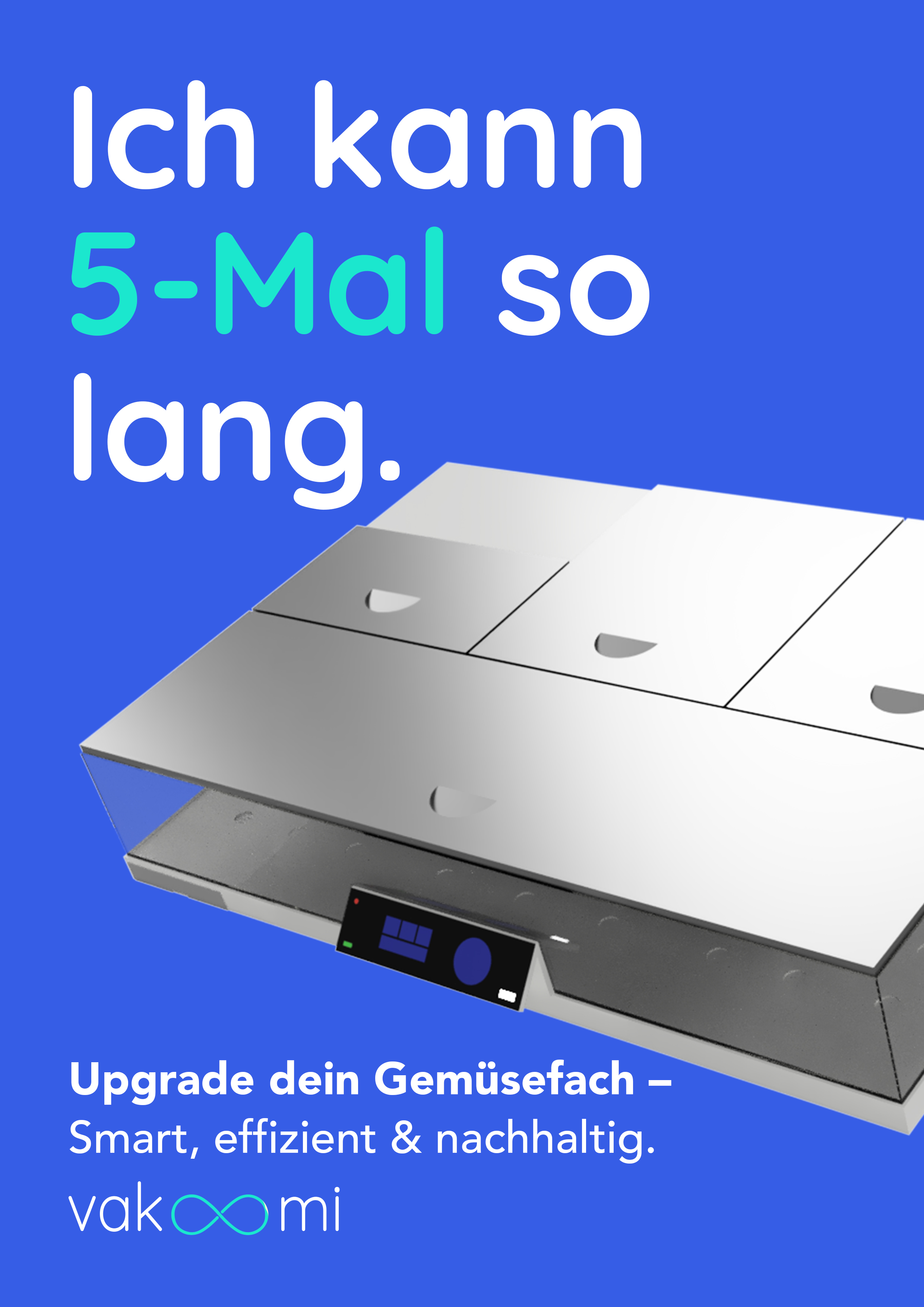
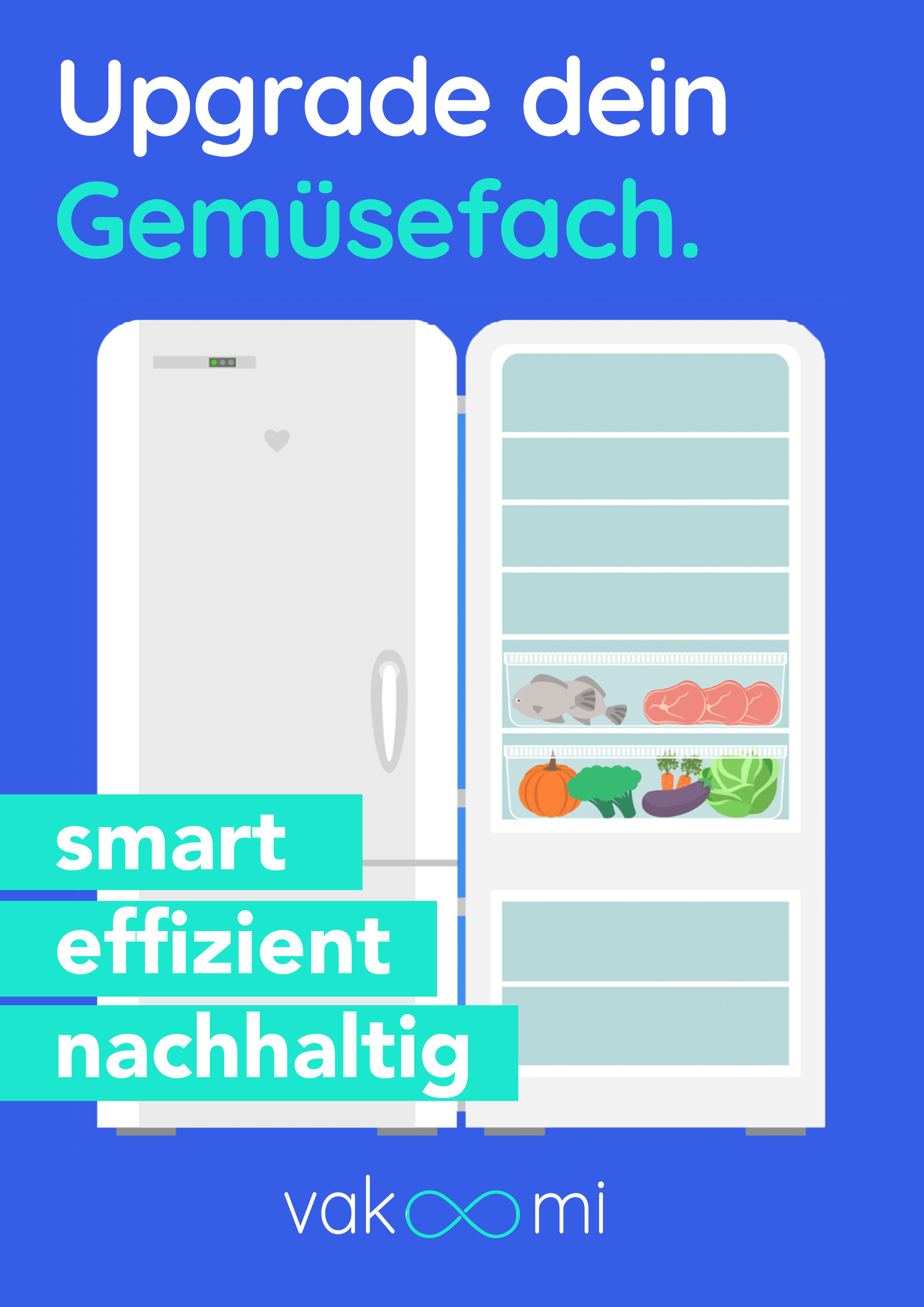

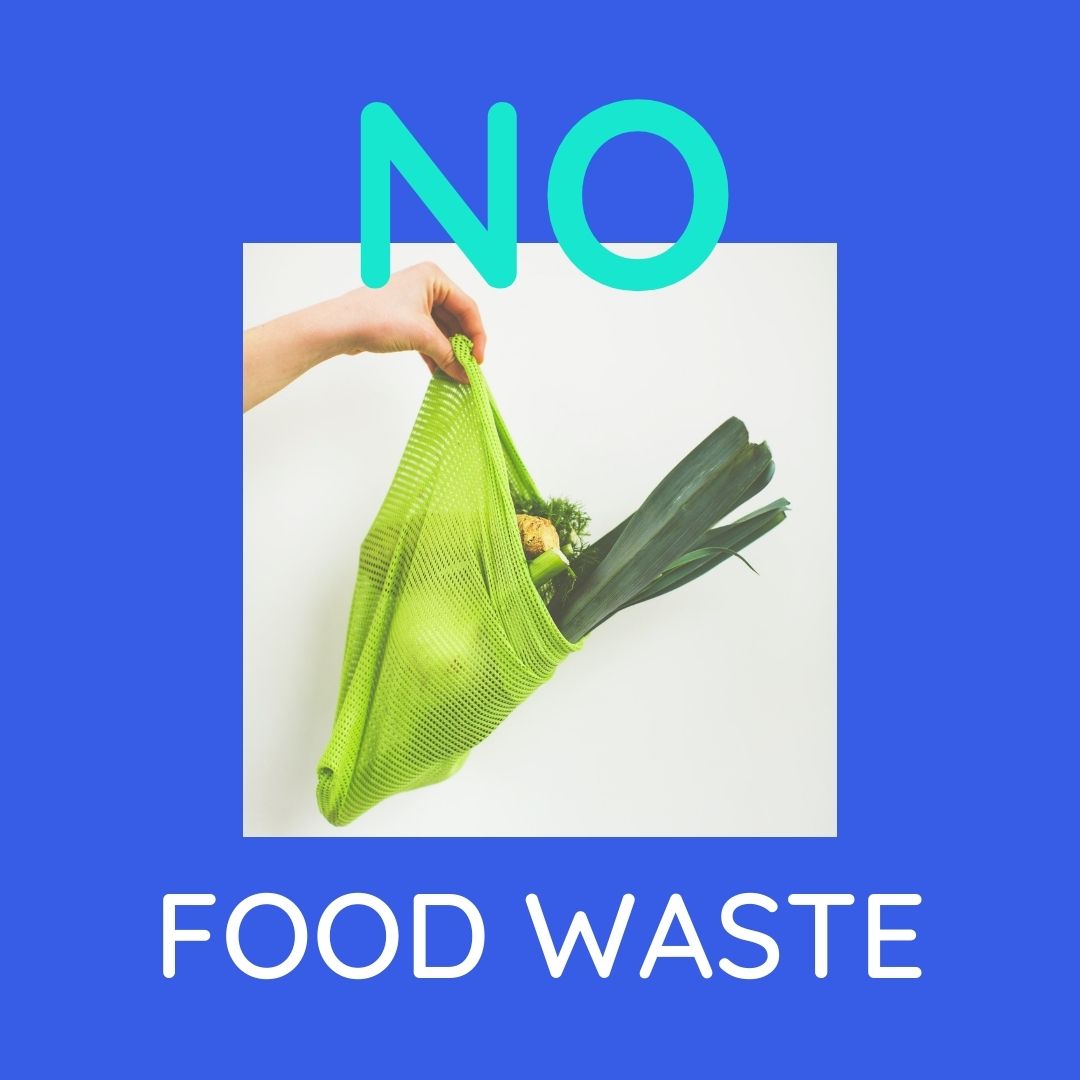
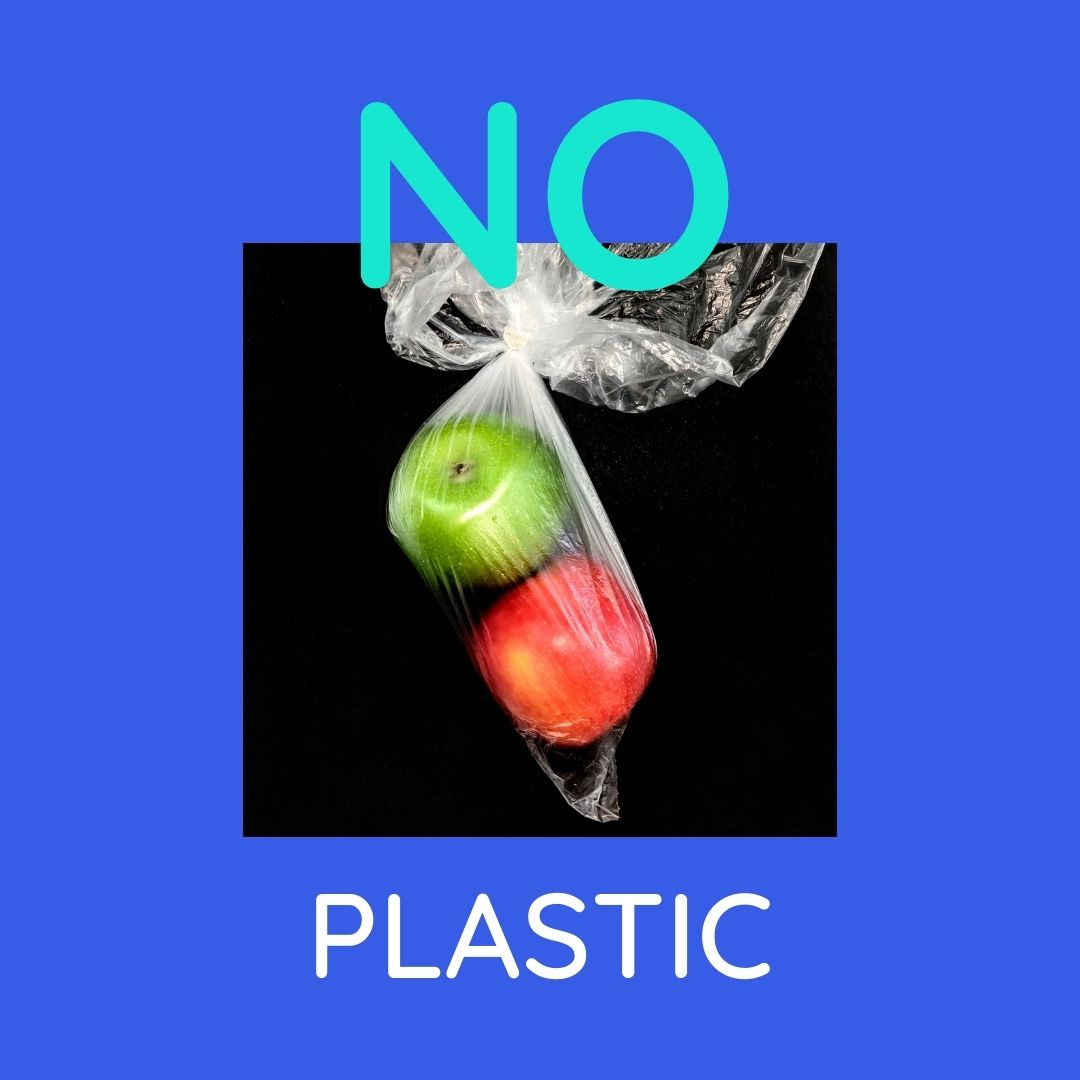
Campaign poster 'Ich kann 5-Mal so lang — Upgrade dein Gemüsefach', second poster variant, and social posts highlighting universal compatibility, food waste reduction, and the elimination of single-use plastic bags.
What designing a physical product taught me about designing software
Vakuumi was the first project where the physical and digital had to work together as one. The 3D design raised questions the app had to answer — and vice versa. If a compartment holds salmon that expires in 12 hours, when does the app notify you? How does the compartment map stay legible when every section holds different content?
Working in a team of four across product design, illustration, app UI, and communication meant every discipline had to stay consistent with the others. Brand decisions affected UI decisions. Product decisions shaped what the app needed to show.
The most useful constraint was BSH’s existing app ecosystem. Rather than designing in isolation, we had to fit Vakuumi into a mature design system — which forced precision over invention. Every addition had to earn its place.